
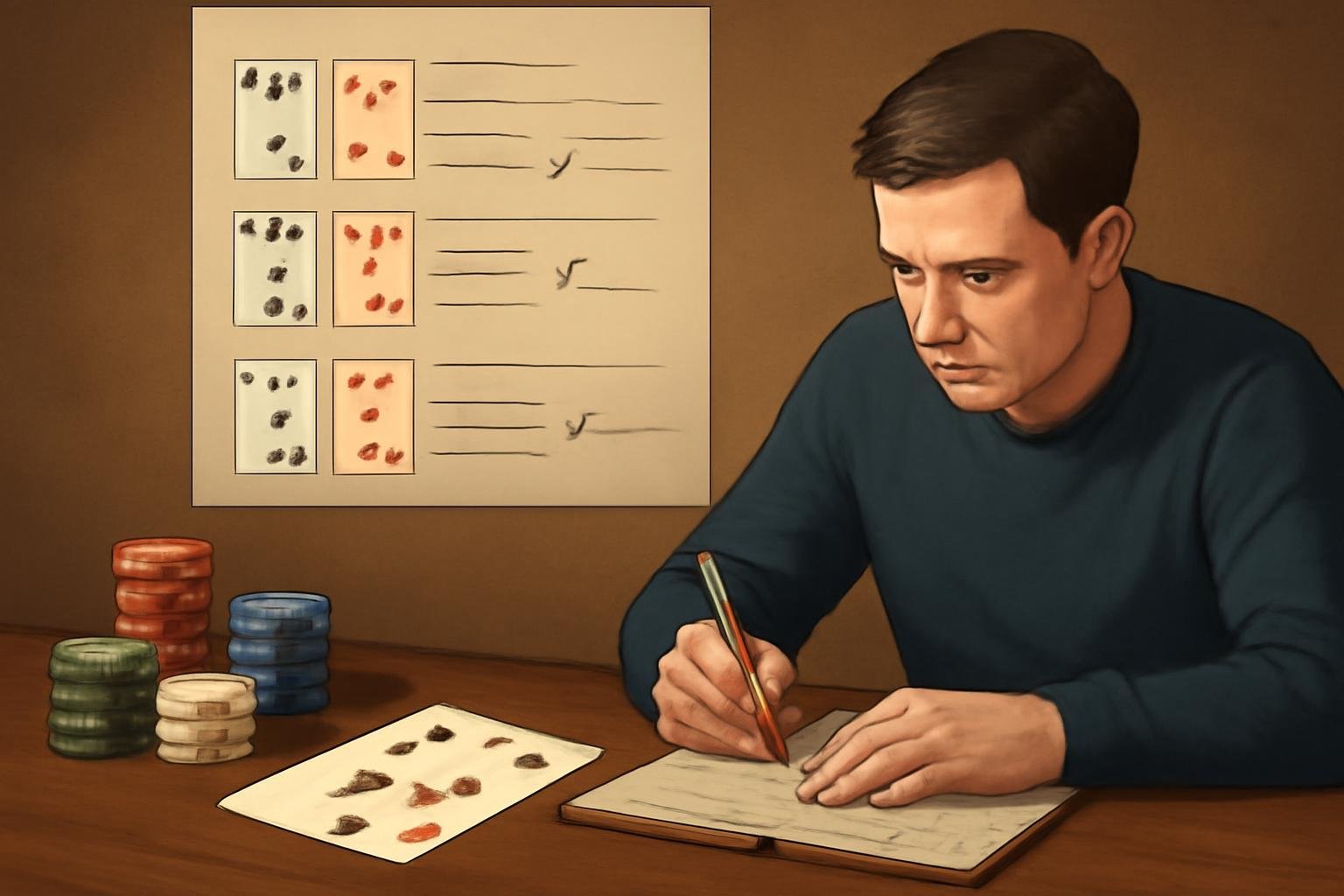
How to Review Poker Hands: A Simple Session-Review Routine
Playing more hands does not automatically make you a more thoughtful poker player. A short, structured review can help you spot decisions worth reconsidering without turning every session into hours of analysis. The goal is not to prove that a hand was “right” or “wrong” based on its result. It is to understand what information you had when you made each decision.
This routine works for casual study of poker hands, whether you play online or with friends. Keep it focused on learning, not on treating poker as a source of income. Set a time limit and take a break if reviewing starts to feel stressful.
Step 1: Save only hands with a decision
Do not try to record every hand. Choose a few moments where you faced a meaningful choice: whether to continue after a bet, how much to wager, or whether to fold. A hand is worth reviewing because the decision was uncertain—not because you won or lost a large pot.
If you use hand-history software, make sure you understand what information it collects and follow the poker platform’s rules. Otherwise, jot down a brief note after the hand or session. Avoid recording other players’ personal information.
Step 2: Write down the situation before the result
For each hand, note the game format, your position, the relevant action, and the cards or board details needed to understand the choice. Then describe what you thought at the time. For example: “I called because I thought the bet could be a bluff, but I had not considered how often this player had raised earlier.”
Keep the account factual. “I got unlucky” describes an outcome, not the reasoning. Separating the decision from the result helps prevent hindsight bias: after seeing the final cards, it is easy to feel that the answer should have been obvious.
Step 3: Review the decision street by street
Walk through the hand in order. At each point, ask what you knew, what changed, and what options were available. Consider these questions:
- Position: Who acted before and after you, and how did that affect the information available?
- Action: What might the opponent’s bet or raise represent? What evidence supports that interpretation?
- Alternatives: Could you have checked, called, raised, or folded? What would each choice aim to accomplish?
- Risk: Was the amount at stake within the limits you set for yourself before playing?
Do not try to assign an exact range of hands if you are not comfortable doing so. Start with broad possibilities and note what assumptions you are making. Your aim is to make those assumptions visible, not to pretend you know an opponent’s cards.
Step 4: Separate process from outcome
A good decision can be followed by a bad result, and a questionable decision can work out favorably. For review, ask whether your choice made sense given the information available at the time—not whether the hand ended in your favor.
For instance, imagine you call a river bet because you believe the opponent may be bluffing. If the opponent shows a strong hand, that alone does not settle whether the call was sensible. Revisit the earlier action and ask whether your read had a reasonable basis or rested mainly on hope. Conversely, winning the pot does not mean every choice in the hand was sound.
Step 5: Find one useful pattern
After reviewing a few hands, look for a repeated issue rather than inventing a new rule from one unusual example. You might notice that you make quick calls when uncertain, or that you overlook position when deciding whether to continue. Write down one specific question to consider next time, such as: “What evidence supports my read?”
Keep the note neutral and practical. A learning log is more useful when it describes a behavior you can observe than when it labels you as “bad” or “careless.” If you want a broader foundation, see our guide on building poker skills through focused practice.
A brief review template
- Situation: Game, position, and key action.
- Decision: What choice felt difficult?
- Reasoning: What did you believe, and why?
- Alternative: What other action was available?
- Takeaway: What single question will you remember next time?
Use the template for two or three hands, then stop. If the same recurring mistakes interest you, compare your notes with this overview of common problems poker beginners can work on. Keep the review aligned with the game you actually play; Texas Hold’em and Omaha, for example, involve different hand structures and should not be treated as interchangeable.
Make review sustainable
Choose a calm time, set a short limit, and focus on decisions rather than profit or loss. If you feel compelled to keep playing or reviewing to recover losses, step away and consider seeking support. A useful poker review should leave you with one clear question to explore—not pressure to play more.


